The post What Is The Minimum Video Length On YouTube For Ads / Monetization? appeared first on James McAllister Online.
]]>It’s common to wonder if very short videos can even monetized at all – especially when the video would be even shorter than the ads that may appear before it!
So, what is the minimum video length? In this article I’ll be answering that question, along with whether or not you should publish the video as a YouTube Short instead.
What Is The Minimum Required Video Length For Ads To Play On YouTube?
Currently, there is no required length for a video to be eligible for monetization on YouTube.
This means that even videos under 30 seconds can have pre-roll ads run before the video starts, despite the fact that they can be longer than the content of the video itself!
That being said, shorter videos do tend to earn less, which I’ll explain in just a moment.
However, as long as the video is published as a normal YouTube video, and you’ve hit the requirements necessary to be able to monetize your videos, then even your shortest videos are eligible to run ads.
Why YouTube Creators Opt For Longer Videos
Just because you can create very short videos however, does not always mean that you should.
This is because the less time your audience spends watching a video, the less money it tends to make. And with very short videos under a few minutes long, your opportunities for extended watch time aren’t really there.
When you think about it, earnings on a video comes down to a simple equation:
Viewers X earnings per ad, X number of ads watched.
The problem with short videos is that you will only be able to show the pre-roll ads, and perhaps an ad that plays after the video ends.
You will not be able to run any ads in the middle of the video, since the video will be too short to support these.
That being said, video length is not the only factor that determines how much you’ll earn. While it does factor into the ‘number of ads watched’ part of the equation earlier, there is another big factor that’s just as important – earnings per ad.
Generally speaking, the more money your audience has – and the more they’re willing to part with it, the more advertisers will pay to reach that audience.
So, if your viewers are based in the United States, you’ll earn a lot more than if they’re based in India, for example, since disposable income in the U.S. is a lot higher.
Likewise, if your videos are about say, finance, you’ll earn a lot more than videos about gaming or art.
Since earnings can vary so wildly, it’s a good idea to avoid comparing yourself to others when it comes to YouTube revenue!
Be Careful Not To Publish As A Short!
If your goal is to make money from ads, it’s very important that you publish the video as a regular YouTube video, and not as a YouTube Short.
YouTube Shorts offer a number of key benefits – namely, the fact that YouTube will push it out to at least a small audience.
However, when it comes to monetization, YouTube Shorts are handled a lot differently.
The fact of the matter is, in its current state it is very difficult to make meaningful income from YouTube Shorts – even on videos with hundreds of thousands of views.
So, even if your video is under 60 seconds (and is eligible to be published as a Short), carefully consider whether or not it’s actually the right option for you.
Again, if you want to run ads on it, than probably not!
Conclusion
Currently, there is no minimum video length required in order to monetize your videos on YouTube.
So, you are free to publish videos as short as you’d like, and still have them be eligible for monetization. However, they must be published as normal YouTube videos, and not YouTube Shorts.
I hope that this article has answered all of your questions. If you have any other questions about monetizing on YouTube – or when you should publish videos as a Short, please ask them below and I’ll be happy to help.
Wishing you the best,
– James McAllister
The post What Is The Minimum Video Length On YouTube For Ads / Monetization? appeared first on James McAllister Online.
]]>The post Do YouTubers Get Paid For Likes? (Answered + Details) appeared first on James McAllister Online.
]]>It’s common for YouTubers to ask for likes at the end of their videos, but does this actually help them make money? In fact, what do likes actually do?
These are great questions, and the answer is actually pretty interesting.
So, in this article I’ll be answering these questions, as well as talking about the other factors that help creators make money on YouTube. If you’re a creator yourself or you simply want to help your favorite YouTubers out, you’ll certainly learn how!
Do YouTubers Get Paid For Likes?
YouTubers do not get paid for likes left on their videos – at least not directly. However, likes act as a positive engagement signal, which can help the video get pushed out to more people.
So although YouTube creators are not paid-per-like, likes do help them make money indirectly, since their videos will ultimately reach more people.
Additionally, likes can show a creator what kind of content is resonating well with their audiences. This helps them to shape their content strategy, releasing more videos that their audience has proven to like, and releasing less content that doesn’t perform as well.
This helps to ensure that future videos that they publish are more well-received by their subscribers, and thus more profitable as a result.
While likes are helpful, they are far from the most important factor that determines how well a video performs, and how much money it makes.
So, let’s look over some of the other things that YouTube’s algorithm uses to boost or suppress videos, so you can discover what else can help!
These Are The Engagement Signals That Affect A Video’s Performance
Let’s look over the different factors YouTube uses to assess a video’s performance, after you’ve clicked on a video.
Remember that YouTube’s goal is to keep you watching videos for as long as possible, and returning to YouTube as frequently as possible. So, consider how some of these factor into these goals!
1. Likes AND Dislikes
We’ve already discussed this one, but did you know that dislikes are counted equally to likes?
It seems counter-intuitive, but it’s true! YouTube considers a dislike to be just as powerful of an engagement signal as a like, and dislikes can actually help a creator in the right circumstances.
This is particularly true if the dislike has been paired with one of the other important signals I’m about to share.
This is why in the past (before YouTube removed dislikes from public view), you could land on videos with lots of dislikes that were still being suggested – YouTube does not always consider them to a bad thing.
To learn more about the effect dislikes can have on YouTube creators, click here!
2. Watch Time
This is the big one.
Because YouTube wants to reward videos that keep people watching, the watch time of a video – both total, and the percentage of the video watched, have a dramatic effect on how far it gets pushed out.
In fact, this is hands-down one of the most important factor – far more than likes, or even subscribers.
If a creator’s audience is consistently watching videos all the way through, this shows to YouTube that the video was interesting and engaging.
So, you can help creators out by watching a bigger percentage of their video!
3. Comments
Similarly to likes and dislikes, comments are a great engagement signal.
Good videos will compel people to share their thoughts in the comment section. Comments prove the viewer wasn’t just letting it play passively in the background – they were actively paying attention.
Comments may also help YouTube gather data about what the video is about, and how you feel about it. The more data YouTube has about you, the more targeted ads they can show, which equates to more money for them.
So, comments help videos reach more people!
4. Subscribers From That Video
The more interesting channels you follow and care about on YouTube, the more likely you are to return to the platform in the future – and the longer you’ll likely spend catching up with everything that’s new.
YouTube tracks which videos on a creator’s page are creating new subscribers for them.
If you subscribe while on a video page, that is going to be factored into the algorithm, giving the video a boost.
Of course, this one can only be done once per person. You shouldn’t constantly unsubscribe and resubscribe to the same person, as it is unlikely to help any further.
5. Time On YouTube After Watching
Here’s one of the factors that isn’t commonly known, but is actually very important!
YouTube doesn’t just track how much of a single video you watch. They actually go on to measure how long you spend watching other videos on YouTube afterwards, which is then factored in!
For example, if you and a bunch of others watch a video and immediately stop watching YouTube after, this is generally a bad signal. YouTube can’t make money when you’re not on their platform, so videos that bore, upset, or otherwise cause someone to stop watching YouTube are a huge no-no.
On the other-hand, if someone watches a video and then spends a lot of time on YouTube after, this is generally a sign that the videos they were watching were an overall good experience.
This effect is amplified if someone watches a bunch of videos from the same creator at once – if someone lands on a video and then watches a bunch of videos from that same creator, all of those videos (and possibly the channel as a whole) may get a boost.
Remember, YouTube is as data-collection company, and the fact that they track everything is why their suggestion algorithm is so powerful!
Conclusion
Although YouTubers are not paid for likes directly, they can help boost the performance of a video.
This in turn leads to higher views, and thus higher revenue. This is one reason why YouTubers often ask for likes at the end of the video – they help the video get pushed to more people.
I hope that you’ve found this article insightful, and it’s shown you some more ways you can help out your favorite YouTube creators.
If you have any other questions about YouTube, ask them below and I’ll be happy to answer.
Wishing you the best,
– James McAllister
The post Do YouTubers Get Paid For Likes? (Answered + Details) appeared first on James McAllister Online.
]]>The post How To Succeed In Business With Small Audiences appeared first on James McAllister Online.
]]>We all want to have as big of an audience as possible. We see websites with hundreds of thousands or even millions of visitors and think,
“Why couldn’t that be me? What am I doing wrong? My content is a lot better then theirs, and look how successful they are!”
This is a dangerous way to think, and can set you up for the wrong targets.
The reality is, it is possible to make 10x the income with an audience a fraction of the size, and it’s dependent on several different factors.
Let’s look over some of these now, and prove that audience size – for the most part, doesn’t matter when it comes to online business success.
Niches, Content, And The Value Of Each Visitor
To illustrate an extreme example, let’s look at two very different markets: video games, and business.
It is exceptionally easier to get Google clicks or YouTube views to gaming content. You could definitely get to 10,000 organic visitors a day on a gaming site far more quickly than you could get to even 1,000 visitors a day on a website targeting business owners.
If you take the numbers at face value, it would seem that the gaming site would appear more successful.
It isn’t until you look at the demographics and spending power do you realize how big the difference is here. To the gaming site, many of the visitors are kids with no disposable income. Even to adults, there are less opportunities available to monetize them.
(Remember, every content monetization strategy has its basis in a transaction happening somewhere – even if you monetize with display ads.)
Business owners on the other hand tend to be wealthier, spend much larger amounts of money, and there are much more opportunities to sell products and services to them – either yours, or promoting other people’s as an affiliate.
When a single visitor to your website can make you tens of thousands of dollars, each individual visitor becomes quite valuable on average – even if most people still end up spending nothing. This is why lawyers for example are willing to spend $30 or more for every single click to their website.
The difference in numbers isn’t just true on a niche level, but on a content level as well.
Content creators that publish content targeting buyer-intent topics – such as reviews about products, are likely to experience a higher return per visitor than those publishing purely informational content.
When a visitor consumes informational content, the next step is for them to end their search and go on with their lives.
When a visitor consumes buyer-intent content, the goal is that they’ll immediately purchase the product, book a consultation, start a free trial, etc – all things that increase the likelihood of money being exchanged.
Monetization Methods
In addition to your niche and the type of content you release, another major factor in determining the value of each visitor comes down to how your monetize.
Content monetization kind of works like a pyramid, both through blogging as well as releasing videos on YouTube.
Bottom: On the bottom, you monetize through something like display ads. These require the highest volume of people to make an effective living from, but the lowest amount of trust. You make money from people showing up and being exposed to ads, regardless of your relationship with that audience. It doesn’t matter if people only view a single page on your website as long as you have a steady stream of people coming in.
In this instance, you tend to need a higher volume of traffic – thousands of visitors daily to see any significant money. Ad revenue depends heavily on your niche as well – you may earn $2 per 1,000 visitors on a gaming site, but $40+ per thousand visitors in something like health or finance.
Middle: Affiliate marketing falls into this category. With monetization methods like affiliate marketing, you’ll make far more from a sale than you ever would with advertising. That being said, there needs to be some level of trust that the visitors have with you before they’re willing to buy anything, unless you target people who are already about to make their purchase.
Typically, this doesn’t require you to have any sort of ongoing relationship with the visitor, though this is beneficial. If your content is good enough and critiques the product fairly, or you’re able to present it in the best possible light, that visitor may go on to purchase without any additional reading necessary. The recognition and branding of the product you’re promoting carries a lot of weight already.
That being said, the affiliate marketers that make the most all work to build an audience they can reach out to again and again.
Top: Up at the top, we have high-ticket affiliates who specialize in selling expensive products, as well as companies selling their own products they’ve created. These marketers require a much higher degree of trust to make a sale, but when they do make that sale, they tend to keep a much higher percentage of it. It also becomes much easier to sell additional products or services to that customer again.
That is not to say that any one of these monetization models is better than the other. Selling your own products may require much less of an audience to make the same amount of money, but there is a lot more work that goes into building trust with that audience. Those looking for passive income may prefer something like display ads, using the time they would spend cultivating relationships to simply crank out more content.
Personally, I find the reward of selling products to be worth the time and skill necessary – particularly as so much of the process can be automated through systems.
For example, I have hundreds of pre-written emails in my autoresponder sequences, with sequences starting and stopping automatically based on user behavior. This was complicated to set up, but over time it turns email subscribers into buyers, and buyers into repeat purchasers.
In very profitable markets, where you are able to repeatedly contact the same sort of people, it becomes possible to make a full-time living with as little as 100 visitors a day – as long as a small percentage of those become email subscribers.
And for those that originally pursued a ‘high traffic, low profitability’ business model like display ads, introducing email marketing means you can build a massive list, very quickly – all without increasing traffic further or publishing new blog content.
Issues – And Solutions
We’ve already talked about two ways to maximize the value of each visitor – choose a more profitable niche, or focus on content that targets buyer-intent keywords.
The problem with this is that these both tend to be more competitive. There is a direct correlation between profit potential, and competition on those niches or articles.
Profitable reviews for example may require you to spend more time building links than actually writing content, which isn’t appealing to many people. I call this ‘The Competitive Link Builder Strategy‘ and some people build entire businesses around it.
Personally, it’s not for me.
I would much rather build up a massive email list, where I can provide value, build relationships and yes – promote targeted products to large groups of people at once.
Over the last 10 years, I have consistently found this to be the most powerful and profitable way to monetize an audience. Your list will grow over time as you naturally attract visitors, and you aren’t prone to Google updates or social media algorithms suppressing your content.
It is truly the best way to reach your audience over and over again, and actually have your message be delivered.
I put together a course specifically on building as large of a list as possible, and maximizing revenue from each subscriber.
The beauty in this strategy is that it can be as simple or as complicated as you want it to be.
On one hand, you could simply write an email and send it to your entire list at once when you have something to say. On the other, you can automate entire sequences – automatically promoting relevant products after subscribers have indicated interest in that subject, targeting the specific pain points or problems subscribers have indicated that they have.
When emails that you’ve written years ago are still making you consistent sales daily, it’s an incredible feeling.

Conclusion
It’s worth paying attention to your total number of visitors – but this isn’t the most important metric to track.
I’d take 1,000 visitors a day in a profitable market, over 10,000 visitors a day in one that isn’t so profitable.
Ultimately, what matters is the total amount of money that ends up in your pocket.
Thankfully, there is a lot you can do to maximize this number, even without changing niches or drastically altering your content strategy.
I hope that this article has been helpful for you. If there are any questions that I can answer, feel free to ask them in the comment form below.
To your success,
– James McAllister
The post How To Succeed In Business With Small Audiences appeared first on James McAllister Online.
]]>The post If You Want To Scale Quickly, You Need To Master Paid Systems appeared first on James McAllister Online.
]]>Every action you take in business either costs you money, or it costs you time.
As entrepreneurs, it goes without saying that we very well may be low on both of these. From the new business owner working a full-time job on top of running their business, to the cash-strapped company that can’t afford to make that extra hire, we are often spread extremely thin without much to show for it.
Unfortunately, unless we change the way that we approach business, it is easy to stay stuck in this trap forever.
Scaling Your Time Vs Scaling Your Money
The key difference between spending money to grow your business versus spending time, is that money can be scaled, but time cannot.
Regardless of how efficient you become, you will only ever have 24 hours in a day to get things done – and a lot of that will be used for things like sleeping and eating.
You could use every minute of that at maximum effort, working on meaningful tasks with perfect time management, yet time will still limit you.
Money on the other hand, can be scaled infinitely. There is no limit to how much you can spend.
Even in the instances where there needs to be human work done to move the business forward, this can be paid for in the form of new hires or by outsourcing tasks.
This is an instance where it’s important to be self-aware of your business goals. If you want to grow beyond a certain level, then you must develop profitable systems.
Companies that figure this out are the ones that skyrocket quickly – going from seemingly unknown to 7 figures out of nowhere. They have figured out how to put $1 in and get $2 back, repeating the process as long as they can.
[easy-tweet tweet=”When reinvesting back into your business, money can be scaled infinitely. Time cannot.” user=”JamesMOnline” usehashtags=”no”]
Bigger Isn’t Always Better
One of the beautiful things about online business is that you can still be extremely successful, even if you never end up hiring anyone.
Sure, you’ll always be limited by the amount of time in the day. And regardless of how skilled you are, you probably won’t ever run a company beyond a certain level.
But that’s not a bad thing.
In fact, I would wager for most of us, the headaches that running larger companies can bring is not worth it. The day-to-day work life, the problems, struggles, and attention is more of a burden than it is a blessing.
Especially since you can go so far – providing a full-time income and more, just on your own.
And even with just a few remote workers that don’t require a lot of management, you can go even farther.
Again, self-awareness is key. If your long-term goal is to run a massive company, you need to take the appropriate steps to build that foundation.
If your goal is to peacefully run something small, you need build a foundation that allows for growth without hiring a ton of employees.
[easy-tweet tweet=”There is nothing wrong with keeping your business small. In fact, for many people, this is the ideal choice.” user=”JamesMOnline” hashtags=”SmallBusiness”]
Where Should Your Money Go First?
One of the most exciting stages of running a company is when it starts to become self-sufficient. You finally have a little extra money to work with, something that can actually move you forward and take you to new heights.
Today, this doesn’t even have to be a whole lot of money. Even a few hundred dollars a month is enough to dabble in paid advertising, hire a full-time virtual assistant, or do something else that can bring you new opportunities.
Of course, the less money you have to work with, the more you have to make it count. Otherwise, you end up no better than you started off.
The key? Reinvest into something that immediately yields a positive return.
Now is not the time to throw money into long-term projects that may or may not pan out.
You want to put money in, and get it back with a profit as quick as you can.
Then do the same with that money, as long as you can.
Most often, this means doing more of whatever earned you that initial money in the first place, if there is room to scale it further.
A Personal Example
When my baby product brand was getting off the ground, we invested heavily in influencer marketing.
Manufacturing our products was cheap (because we owned the machinery and could run small batches), so the majority of our monetary costs was in shipping. To start out, we specifically worked with micro influencers that didn’t ask for any form of additional payment on top of receiving the product.
Of course, there was a large time cost to arranging these deals. Not only did we have to find the influencers, but we had to message them, follow-up, arrange details, and so on.
Since we had proven that influencer marketing was already working for us, we hired a virtual assistant to handle this entire process. They would find the influencers, arrange the deal, and add the influencer’s shipping address and product choice to our order management system. Our order fulfillment team would then mail these out just like any other order.
It became seamless, completely hands off, and removed me from being involved in the process at all, giving me all of my time back.
That $350 / month we paid for a full-time VA (who admittedly, ended up working on some other tasks as well) was well worth it. Not only did we make more money from arranging more deals, we did it at a far cheaper cost because I was no longer working on it.
Other Great Ideas
The key to scaling any system is knowing your numbers at each step of the process.
You need to know exactly how much money you’ll earn for each dollar put in. You also need to know how long it will take for that money to return to you.
For example, you may profit off of an advertisement the first day you run it.
Or, you may make just as much money by investing in another article for your blog, but it may take 6 months for that article to actually pay for itself.
When money is tight, you should prioritize low-risk, short-term projects that will return your money back to you quickly. Save the longer-term projects for a time in which you have healthy cashflow and nothing else to invest in.
Some good examples include:
- Scaling whatever’s currently working – doing more of it, or cutting costs.
- Direct response advertising. Note that PPC advertising like Facebook Ads or Google Ads often are unprofitable at first, and you may need to run many variations to end up with a profitable campaign.
- Hiring someone whose job can be directly tied to revenue. Or, hiring someone that frees up your time, so you can do work that ties to revenue.
- Education and training that can help you make more out of what you already have.
Some poor examples may include:
- Launching new product lines.
- Branding campaigns.
- New projects that do not tie in, or help lift up your original revenue source.
Calculate The Value Of Your Time
If you’re struggling with the idea of outsourcing or hiring, there’s one simple rule of thumb to follow.
Take whatever you could earn for an hour of your time – even if it is only minimum wage. If you’re able to outsource something cheaper than that price, you should always do it.
This is true even if the person you’ve hired isn’t as efficient as you are.
For example, let’s say you earned $8 an hour. You outsource a project that would normally take you 1 hour, costing you $8 in time.
You can outsource this to someone that you’d pay $2 an hour. Even if they take double the amount of time to get the work done – costing you $4 in total, then mathematically you’ve still come out ahead.
I am convinced that business owners should continue working part-time jobs if it means they’ll be able to hire 2 full-time employees from the Philippines – it just makes sense mathematically.
Outsourcing: Building Full-Time, Philippines Based Teams

If you’re a solopreneur looking to move to the next level, then you should consider making your first hire from the Philippines.
Hiring a Filipino worker can be 10x cheaper than hiring somebody from a country like the U.S or U.K, and the quality of work will be just as good.
I consider it to be one of the biggest advantages my eCommerce brands had as they were growing.
As for what role to hire, it typically depends on the type of business you’re running.
Bloggers and content creators may benefit from hiring a writer or video editor. Freelancers may benefit from hiring the same role that they perform now, moving from a solo freelancer to a small agency.
Most businesses however can benefit a lot from a virtual assistant – somebody who frees up your time, by taking care of all the small tasks that you don’t really think about. Some examples include…
- Customer service
- Posting on social media
- Email outreach
- Data entry
- Any task that can be done solely on the internet.
Think about it – how much do you do each day that could be done by someone else, if you only took a moment to show them?
With over 50 video lessons, it contains everything I know about recruiting the best possible talent for the best possible price.
Conclusion
Failing to reinvest back into your business will severely hamper its growth.
While you will only ever have 24 hours in a day, there is no limit to how much money you can pour back into your business. It is the act of reinvestment that turns small hobbies into massive companies, and the key is creating profitable systems.
I’d love to learn more about your business, and what your immediate plans are to help it grow. Leave a comment below and let me know.
To your success,
– James McAllister
The post If You Want To Scale Quickly, You Need To Master Paid Systems appeared first on James McAllister Online.
]]>The post Affiliate Marketing Success After Google’s Product Reviews Update appeared first on James McAllister Online.
]]>Google recently released an update targeting product review websites, which has sent Amazon Affiliates scrambling.
It makes sense. Amazon affiliates have been hit hard this last year, with Amazon cutting commission rates and making it even more challenging to make money with the program.
But is Google’s product review update the final nail in the coffin?
No, and in this article I’ll show you why it can actually be a good thing.
Let’s Be Honest. We Should Have Seen This Coming
I’ve been predicting an update like this would pop up for about a year now. Here’s why.
As time has gone on, I’ve seen more and more normal people (meaning non-marketers) complaining about product review articles in Google. First on Reddit, then elsewhere.
These people turn to Google for legitimate, unbiased information about products or services.
And what do they find?
Marketers everywhere. Endless comparison articles, buying guides, and reviews that all rehash the same old information from each other, pushing for a sale regardless of how good the product even is.
(Like the website owner would know. They almost have never used the product and rarely do any deep research into them.)
Even worse, many of these articles are written by freelancers that not only have no product-level expertise, they have no expertise at all about the entire market. They may write about guitars one day, and building homes the next.
Sure, good writers can develop good pieces on brand new topics. But with Amazon affiliate owners going as cheap as they can, let’s be honest – everyone is rehashing whatever posts were already ranking.
Marketers have gone too far, lied too much, and pissed too many people off.
So Google stepped in to take care of things. Although they say that they’re not penalizing sites that don’t meet their new criteria, they are rewarding sites that are, which in a way is quite similar.
The result? Some websites have taken a 20-40% (on average) dip in Google traffic.
Here’s Why This May Actually Be A Good Thing
First of all, if one of your sites was affected by this update, I apologize and sympathize with you. I have experienced previous Google updates that have crushed sites I had invested tens of thousands of dollars into. It’s a really terrible feeling, especially since these updates tend to come on suddenly, and there’s not a whole lot that you can really do about it.
Thankfully in this day and age, Google does not penalize entire sites as much as they used to. Not only can you recover from this update, it is actually possible to end up doing much better than you were previously.
Think about it this way. There are a ton of review websites out there that are no longer being worked on, that were also hit by this update. Many of those articles are dropping out of search.
Even for active sites, many of the owners will call it quits after this huge drop and not bother to work on their websites anymore, while even those that carry on might not make any changes to recover their positions.
This leaves a lot of opportunity for someone like you to swoop in and claim those spots.
How Affiliate Marketers Can Thrive Under The Product Review Update
Let’s take a look at what Google actually cares about – what prompted them to release this update in the first place.
- Always remember that Google’s priorities center around the users, not around you.
- Google wants users to have access to unbiased, accurate information.
- Google wants to avoid rehashed, recycled information dominating all of the top spots.
- Google wants to highlight people with unique experience or expertise, that make them qualified to give purchasing advice.
- Google wants users to have access to specific, tailored advice that helps users make ideal buying decisions.
In other words, the exact opposite of what many review sites were doing. For a full list of suggestions that Google thankfully provided, click here.
If your new article offers nothing of value over what already exists (or what is already provided by the manufacturer), you shouldn’t expect it to rank.
Fortunately, there are steps that we can take to provide Google with what they want, even if you are paying freelancers to develop your content.
Let’s look into them now.
1. When Possible, Actually Buy Your Product
This one’s probably obvious. And if there is a single thing you can do to differentiate yourself from the other review sites out there, it’s actually using the product.
I get it. It is difficult to scale this way. Many Amazon affiliate sites are built around expensive products in order to maximize commissions, and it just isn’t feasible to purchase every product you intend to review.
That being said, ask yourself – how much would you make if you ranked for the #1 spot? Is there any way you could borrow the product from someone else? Are you able to request a review unit from the manufacturer, even if you’ll have to mail it back? And finally if you did purchase it, how much would you be able to easily resell it for?
Even if you don’t intend to physically try out every product (and from an ethical standpoint, I certainly believe you should), asking yourself these questions may make it easier to justify the purchase for the most important products.
(I started a new site in the musical instrument space to help justify my expensive hobby!)
2. Take (Or Create) Unique Photos
It is obvious to Google when you ripped photos straight from the manufacturer. It is also obvious to Google when you take photos from elsewhere and reuse them.
If you are able to get the product in your hands, be sure to take lots of unique photos to use within your article, and to demonstrate important points.
If you’re unable to take unique photos, look for opportunities to embed relevant YouTube videos within your articles. Even if these videos themselves are affiliate reviews for those products, it will still benefit you and you shouldn’t fear losing the commission to this other marketer.
Finally, you can create unique photos yourself by editing manufacturer photos with Photoshop or other image editing tools. For example, adding text, or drawing arrows to different parts of the product.
3. Highlight Your Expertise
For years now, Google has been taking steps to make sure that credible people – with unique expertise or experience in their market, are rewarded accordingly.
Conveying real credibility to Google is difficult, but you should always look for opportunities to convey special knowledge about your market.
This may come in the form of personal stories involving the product, how it compares with other products that you have tried out, or deeper research that goes beyond what the manufacturer and other affiliate sites have shared.
It could even be something as simple as an analysis of their support response time. Sending a question to the manufacturer’s email and logging the result is something that only takes a few minutes, but instantly gives your article something that nobody else has.
Regarding the types of products you promote – I don’t yet have the data to validate this, but I am willing to bet that large-scale review sites – publishing reviews for random products got hit harder than relevant niche sites that focus around one core product category.
Surely lack of niche expertise played a part here.
4. Leverage Reviews And Real Discussions
Real research into a product goes beyond page 1 of Google.
It takes time, and you’ll have to read a lot in order to discover patterns.
In my opinion, there are two good places to look if you really want to learn about a product’s performance. Amazon reviews, and communities.
On Amazon, pay attention to 2-4 star reviews the most, as they are the most honest. Browse over the ‘questions and answers’ section – what questions are people asking?
For communities, Reddit along with niche forums will usually yield the best information.
Pay attention. What are their concerns? What do they legitimately like and dislike about the products? What other products are recommended in its place, and why? What use cases are people saying that they’re purchasing the product for?
Keeping all of this in mind will help you craft better articles, that actually address what people are really wanting to know.
As an added bonus, you’ll rank for more long-tail keywords too.
5. Authenticity Matters. Avoid The ‘Commission At All Costs’ Mindset
Your product review should never read like an extended sales pitch.
This was always true (consumers could see right through it,) but it’s even more true now.
Think about it this way. Google knows what ‘salesy’ buzz words are. They know what words or phrases often appear in copywriting or on sales pages.
Reviews will use entirely different sets of words if they’re doing a good job actually well, reviewing.
In fact, not only should you avoid being salesy, but you should go out of your way to illustrate who the product is not for. Why would somebody choose a competing product instead? What specific things are certain products better at?
Highlight these in your reviews. In fact, if you develop a review on the competing products, you can link the two together and earn more commissions, while still adhering to Google’s requests.
All-in-all though, be honest. Not every product is perfect, and you know it.
How To Ensure Writers Adhere To These Guidelines
As with all writers, the best thing you can do is to be specific with your instructions. Show them this article and explain why it’s important.
At the same time, understand that you can only expect so much from freelance writers, especially if you are ordering from content services.
Therefore, you’re left with two options:
1. Take the content you’re provided, and update it in accordance with the above tips before publishing. Personal stories, unique research, and so on. This will still save you 80-90% of the time developing the article yourself.
2. Hire someone with niche expertise. Personally, I recommend hiring from the Philippines, where quality writers (that either already have, or will grow to have niche expertise) can be found for as little as 1 cent per word.
Many people don’t know this, but the right Filipino writers can be just as good as native English speakers. And because you’ll be their sole employer, they can develop true expertise as they learn more about your brand and your market.
I’ve developed a course on outsourcing to the Philippines, because I consider it to be one of the biggest contributors to my success.
You can learn more about the course by clicking here.
Conclusion
In the end, this update may be a blessing in disguise for many marketers.
Good, valuable content is being rewarded, and those that go above and beyond stand a better shot at ranking – even without building as many backlinks.
If you were hit hard by this update, I strongly encourage you to analyze your site. Then go back and update rather than replace old articles, and monitor the results.
Finally, if you want to learn more about building profitable Amazon affiliate sites, I strongly encourage you to purchase my Amazon Affiliate Blueprint.
It can be purchased on its own, or as part of my VIP club that also includes the outsourcing course mentioned previously.
To your success,
– James McAllister
The post Affiliate Marketing Success After Google’s Product Reviews Update appeared first on James McAllister Online.
]]>The post The Top 5 Amazon Affiliate Plugins For WordPress (Free And Paid) appeared first on James McAllister Online.
]]>If you’ve registered for Amazon’s affiliate program, you probably realized pretty quickly that Amazon doesn’t exactly make it easy to promote their products.
Manually going over to their website and grabbing their link is a tedious process.
Then – if you actually play by the rules, you aren’t even allowed to download the pictures from the listing. You have to fetch them from the API, which can take even more time.
It’s a huge hassle.
Fortunately, developers have recognized the need to simplify this process, and have developed a number of WordPress plugins for Amazon affiliates to use.
Truth be told, they can save a lot of time and make it even easier to promote products within your content – among a number of other useful features!
In this article, I will be covering the top Amazon affiliate plugins for WordPress, including both free and paid options.
Note that only plugins specifically designed for Amazon’s affiliate program will be mentioned. Link cloaking plugins for example – which are good for other affiliate marketing channels, aren’t allowed by Amazon, so they won’t be mentioned.
Let’s get to it!
1. AAWP (Amazon Affiliate WordPress Plugin)
If I had to pick a single plugin that I would recommend for Amazon affiliates, it would probably be this one. In fact, this is the one I’m currently using across my network of websites.
Other plugins have unique features that may stand out to you, and I will discuss those later. However, as a single overall solution, I couldn’t find anything that would be better for most bloggers than AAWP.
Here are some useful features that really stand out to me:
- Generating links – including image links, is quick and simple.
- A surprisingly large amount of information can be pulled from the API, and embedded into your website. Price, star reviews, bullet points, product attributes etc.
- Bestseller lists. When you don’t have a specific product in mind you want to direct people to, you can display a box showcasing the bestselling products instead – then let people choose whichever one looks best to them. This is particularly useful for affiliates promoting low-priced commodity products within informational articles.
- Geotargeting, changing links for international traffic. This is useful even if you have OneLink enabled.
- Sidebar widgets. Personally, I only find this useful if you’re running an extremely specific niche site, but the feature is there if you want it.
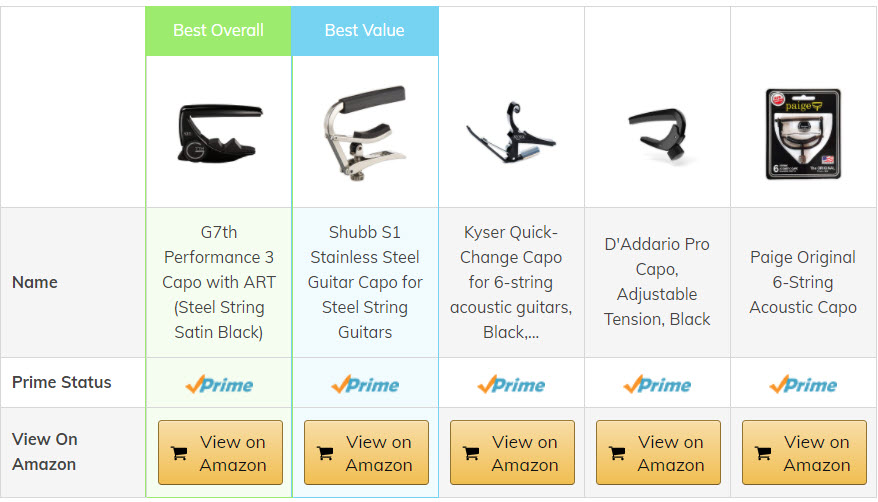
The other primary feature I’d like to draw attention to is the tables. AAWP has my favorite table designer / inserter out of every plugin I’ve tried. For example:
- You can quickly compare several products next to each other, creating separate rows with different attributes. The tables created by AAWP look fantastic – they draw attention, without looking pushy.
- You can have Amazon pre-fill the rows of these tables with available data, or fill them out yourself. For example, you could make your own pros and cons list when comparing multiple products.
- Highlight specific product columns. For example, out of 4 products, you might highlight one product as the ‘best value’ and another as your ‘top recommendation.’
Here’s an example:
Pricing starts at 39 euros for a one-site license.
Learn more about AAWP by clicking here!
2. EasyAzon (Paid Edition)
Next up, we have EazyAzon, which claims to be the most convenient way to add Amazon Affiliate links to your website.
One thing’s for certain – it’s definitely convenient! Links – including image links, can be added to articles in seconds without leaving the WordPress editor.
There are two key features that I think EazyAzon implements very well.
The first is ‘Add To Cart’ buttons – buttons encouraging readers to actually add the item to their Amazon cart straight from your website. The benefit of this is that when somebody adds an item to their cart using your affiliate link, the cookie duration for that item is set to 90 days rather than only 1 – giving you a much longer window for that reader to actually convert.
This is something you’ll need to split-test though. Although the cookie duration is longer, it’s also a much bigger commitment by readers to add something to their cart rather than simply visit the product page, and this may actually hurt earnings rather than help them.
The second neat feature is is pop-up links. You can see an example from their website here:
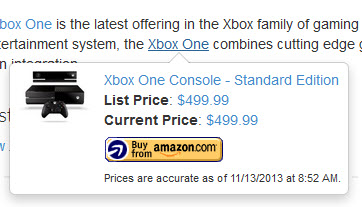
Essentially, when a buyer hovers over the link, a small pop-up box appears showing the picture / price, as well as a button encouraging the reader to buy.
EazyAzon has many other common features as well, including link localization and the ability to pull data from the API.
Pricing for EazyAzon starts at $47 for unlimited use on your own websites, and $67 if you also want to use it on client websites.
Learn more about EazyAzon by clicking here!
3. Amazon Auto Links
If you’re looking for a free solution, my best recommendation would be Amazon Auto Links. It is a little more complicated to use than the other plugins here, but considering that it’s completely free, you really can’t go wrong.
Amazon Auto Links does have a number of useful features:
- If promoting a single product, you only need to drop your link into the editor to create a box containing a photo + product information. This can save you a lot of time.
- Insert multiple products together into your page using shortcodes.
- Insert categories of products – i.e the top 5 bestselling mouse pads. Note that you can only import based off actual categories on Amazon, but not search queries like you can with something like AAWP. This means that while you can pull the best selling mouse pads for example, you can’t pull the bestselling results for queries like ‘black mouse pads’ or ‘mouse pads for gamers.’
- Automatic link conversion – any Amazon links on your website can be converted to Amazon affiliate links, including links left by commenters or guest authors.
Learn more about Amazon Auto Links by clicking here!
4. AMALinks Pro
The next plugin I’d like to mention is AMALinks Pro – which would probably be my 2nd choice after AAWP.
As a matter of fact, if you don’t have access to the Amazon API, I would actually recommend AMALinks Pro over AAWP, as AMALinks Pro has a built-in feature specifically for affiliates who don’t yet have access to Amazon’s API. If you aren’t sure whether or not you have it, the requirements for access is that you’ve generated at least 3 sales using Amazon affiliate links in the past.
That being said, it is much quicker and easier to use AMALinks Pro if you do have access to the API, as their workaround features are a bit cumbersome to use.
Other features that AMALinks pro has over AAWP is the add-to-cart feature, which is also present in EasyAzon. If you skipped over that section, you’re granted a 90-day cookie for any items added directly to a shopper’s cart, which has the possibility (but not guarantee) to increase earnings.
Additionally, AMALinks Pro allows you to insert custom call-to-action buttons with your affiliate links – changing size, color, and text. AAWP is much more limited in this regard.
To be honest, you can’t really go wrong with either of them – I simply consider AAWP to have better overall design, which is why I use it over AMALinks Pro personally. Still, this plugin is a great one, and is definitely worth consideration!
Pricing for AMALinks Pro starts at $67 yearly for a 1 site license.
Learn more about AMALinks Pro by clicking here!
5. Geniuslink
If you’re looking to monetize through multiple retailers, Geniuslink is perhaps the best choice.
Although it’s not an Amazon affiliate plugin on its own, it supports Amazon’s associates program – as well as the affiliate programs of many other retailers such as Target, Walmart, Best Buy, etc. It also connects with Skimlinks and Sovrn Commerce, allowing you to auto create affiliate links for other programs even if they aren’t officially integrated.
The way it works is this – after clicking an affiliate link, the visitor is able to choose which retailer they’d like to be sent to.
This is particularly useful in a few industries, where brands other than Amazon may be a more desirable choice. Music, technology and photography all come to mind, and there are certainly others as well.
Customers benefit from being able to order from a company that they trust more, and you benefit from higher commissions.
Some have argued that the extra step required to choose a retailer can lead to lower click-throughs. While I don’t have any data to back this up, I think it should be said that those who aren’t motivated to even click through, probably weren’t going to become buyers anyway.
Geniuslink will also route people to their local marketplace for international traffic, and notify you when product pages 404 or go out of stock on Amazon.
If you’re going to monetize through multiple retailers, it’s worth checking Geniuslink out.
Pricing for Geninuslink starts at $5 a month for up to 2,000 clicks per month, then $2 per additional 1,000 clicks after that.
Learn more about Geniuslink by clicking here!
Conclusion
It is almost certainly worth using one of these plugins to boost your Amazon Associates revenue, especially if you do a lot of product comparison articles, or regularly pull things like photos or prices from Amazon pages.
Not only can the plugins save you a lot of time, they’re also able to create nice looking tables and boxes that aid in conversion, while simultaneously providing a better experience to your readers.
If you want to maximize your Amazon Affiliate revenue further, I highly recommend picking up my Amazon Affiliate Blueprint, which goes into detail about all the advanced strategies I use to maximize earnings with Amazon’s affiliate program. You can learn more about it by visiting my products page.
Finally, I’d love to hear which plugin you decided to go with – as mentioned earlier, you really can’t go wrong with any of them!
To your success,
– James McAllister
The post The Top 5 Amazon Affiliate Plugins For WordPress (Free And Paid) appeared first on James McAllister Online.
]]>The post The Top Affiliate Program Plugins For WordPress – Free And Paid! appeared first on James McAllister Online.
]]>When it comes to choosing an affiliate program plugin for your WordPress website, it’s very important to make the right choice from the beginning.
Unlike so many other plugin choices, this one doesn’t only affect you. Once you have affiliates registered on your blog or website and they’re actively earning commissions, it will be far more difficult to switch systems later. Even if you’re able to migrate accounts and data, it can be difficult to get everything transitioned seamlessly if you decide you want to change plugins later.
I don’t say this to scare you, but to illustrate an important point – this is a topic you’ll really want to research before you commit to any final decisions.
In this article, I will be covering the top affiliate management plugs for WordPress – comparing and contrasting them against each other, to help you decide which plugin is best for your affiliate program. Note that this is solely based around plugins that are designed to help you run your own affiliate program for your products and services. This list does not include any plugins to help you with affiliate marketing itself.
Let’s get into it!
How I Will Be Judging Each WordPress Affiliate Management Plugin
Full disclosure – I have not used every single plugin that I’m about to mention on a live website.
In fact, the only one I still use today is Affiliate Royale – which I will discuss in more detail later. This is the plugin that powers my own affiliate program for the products I sell on this website.
However, I’ve done extensive research into each plugin I will share here, and will be basing my judgement on the following:
- Features – are the features that most affiliate managers would need available in the plugin?
- User reviews – reviews from actual users, and the specific things they liked and disliked about the plugin.
- Integrations – what other software does the plugin work with?
- Value for the price.
I have been running affiliate programs for several years now, and consider my affiliate program on my website a vital component of my business success, so I hope to share some of my lessons with you as well!
Out of all of the affiliate program plugins available, I have narrowed it down to the following:
1. AffiliateWP
I first discovered this plugin after realizing that several affiliate programs I’m personally a part of, run on AffiliateWP.
From an affiliate’s standpoint, I already know that it has just about anything that an affiliate would need to find success with the program. When I began researching it from a website owner’s perspective, I began to understand why so many people choose it. In fact, if I were starting my affiliate program today, this may have been the one I would have ended up going for.
Some standout features include…
- Easy setup / integration into WordPress. Although you will probably want to customize the messaging to fit your website, you can get everything setup in under 30 minutes. New affiliates will be able to easily grab their links and begin promoting without much hassle.
- Plenty of different ways to offer commissions. Set commissions on a per-affiliate basis, enable tiered commissions (different rates upon reaching X amount in sales, for example), recurring commissions, lifetime commissions, flat-rate commissions or percentage commissions, etc.
- Adding affiliate resources such as banners or email swipe files is simple.
- The ability to give affiliates specific coupons.
- Integrations with a large number of other systems, such as MemberPress, WooCommerce, and MemberMouse. A full list of integrations can be found here. Note that AffiliateWP claims to be able to track and credit affiliates on any page where you can place a custom shortcode – so even if an integration isn’t directly supported, you can still track via order confirmation pages, ‘thank you’ pages, etc.
- Automatic payouts via PayPal.
AffiliateWP also seems to still be in active development, with frequent updates as well, which is nice. It covers everything most people would need, and new features are still coming out.
AffiliateWP starts at $99 per year, and goes up to $250 / year for their highest-tier offer. Note that some of the features mentioned above are only available on the highest-tier.
Learn more about AffiliateWP by clicking here!
2. Affiliates Manager
If you aren’t ready to invest in a paid solution, Affiliates Manager is probably the best free affiliate program plugin for WordPress.
Affiliates manager may not have any fancy extra features that the paid plugins can provide, but it will cover all of your basics, including:
- Real-time reporting dashboard for affiliates
- Flat-rate or percentage based commissions
- Affiliate resources
- Integration with WooCommerce and many popular membership plugins (MemberPress was not listed, however)
- Affiliate payments via PayPal
Again, it is certainly not the greatest affiliate plugin out there. However, considering its completely free, you can’t really complain!
Learn more about Affiliates Manager by clicking here!
3. Affiliate Royale
As mentioned previously, Affiliate Royale is the plugin I use for my own personal affiliate program. It came bundled with MemberPress when I purchased it, which is how I first became introduced to the plugin in the first place.
I’d consider it about a tie with AffiliateWP in terms of features – you can do just about anything you’d want or need to with Affiliate Royale, and I haven’t really found any reason why I’d want to switch away from it.
Some of the features I appreciate having include…
- Easy customization of commissions. Like AffiliateWP, you have lots of options – one-time vs recurring commissions, flat-fee vs percentage, set separate commission rates for certain affiliates, tiered commission levels, etc.
- Multi-level commissions – pay affiliates not only for their own sales, but also the sales of any affiliates they recruit the program. I recommend being very conservative with this feature.
- Monitor affiliate performance – both as a whole, and on an individual level.
- Easy reporting, link generation, and affiliate resource management for affiliates.
- Payments via PayPal.
- The ability to allow any page on your website to become an affiliate link. This allows affiliates to link to normal blog posts of mine but still earn commissions if those visitors end up purchasing.
- Integration with WooCommerce, MemberPress, MarketPress, and Easy Digital Downloads. Like AffilateWP, Affiliate Royale also has a custom tracking pixel, so it’s possible to work with additional software as well.
It is a little bit clunky from an admin’s perspective, but there really shouldn’t be a whole lot of work you need to do with it once it’s set up, so I personally think it’s pretty easy to look past.
Affiliate Royale is currently $85 for a one-site license, and includes one year of support and updates. If you want to run an affiliate program on multiple websites, they also offer a developer license for $165. This makes it a great choice for agencies, as there is no limitation to the number of websites you can install it on.
Learn more about Affiliate Royale by clicking here!
4. Ultimate Affiliate Manager
I was a little taken back by this plugin when I first came across it, because their website is riddled with grammar errors. It gave off the sense of being a bit unprofessional, and to be quite honest, I was worried that the plugin would be complete junk.
I was wrong!
In fact, there are thousands of great reviews on this plugin from website owners across a large variety of industries.
Some of the standout features include:
- Multi-level commissions / affiliate referral program
- Tiered commission structure
- QR code generator, tied to the affiliate’s link
- Periodic reports sent to affiliates, so they do not have to login to check their dashboard
- Coupon creation
- Top affiliates list, posted inside your affiliate program
- A modern design that (in my opinion) is probably the best out of every plugin mentioned here.
Ultimate Affiliate Manager is the cheapest paid plugin on this list, coming in at $59 for a lifetime license. The biggest complaint I’ve seen with Ultimate Affiliate Manager is that the support isn’t that great. Some users have complained that support has taken a week to get back to them, while others have mentioned that they have had their problem ignored completely. Of course, people are more likely to speak out when they have a bad experience rather than a good one, but considering this is the cheapest (paid) option on the list, you may get what you pay for.
Learn more about Ultimate Affiliate Manager by clicking here!
So, What Plugin Would I Recommend?
If I had to choose what plugin I’d consider to be the best, it would probably be AffiliateWP.
However, the best value for the price has to go to Affiliate Royale. Affiliate Royale is more than enough for just about everyone, and is only 1/3rd the cost of AffiliateWP’s top plan (unless you buy their lifetime license, which becomes cheaper after 6 years.)
There are a few reasons I rank AffiliateWP a bit higher than Affiliate Royale – AffiliateWP has a few more features, better reporting, and (in my opinion) an interface that’s easier to work with.
It’s also updated far more frequently. To be honest, I can’t recall a single new feature added during my first year with Affiliate Royale.
That being said, AffiliateWP only has a significant edge when you sign up for their more expensive plan, that includes all of their pro add-ons.
Depending on the complexity of your requirements, AffiliateWP may or may not be worth the extra $160 / year. And to be honest, you really couldn’t go wrong with either Affiliate Royale or AffiliateWP.
Learn more about Affiliate Royale by clicking here!
Learn more about AffiliateWP by clicking here!
Conclusion
To be quite honest, you really can’t go wrong with any of the plugins mentioned within this article. All of them have the basic features most affiliate programs would need, and any differences between the paid plugins are not all that substantial.
Of course, considering how valuable an affiliate program could be for your company, it makes sense to go with the best possible option from the very start. When your affiliate program succeeds, all of the time and money spent getting it going will have been well worth it.
I’d love to hear which you end up going with!
Wishing you the best,
– James McAllister
The post The Top Affiliate Program Plugins For WordPress – Free And Paid! appeared first on James McAllister Online.
]]>The post Is Pinterest Traffic Worth Anything? How To Maximize Its Value appeared first on James McAllister Online.
]]>One question I commonly get from website owners – both bloggers as well as eCommerce store owners, is the value of Pinterest traffic.
Is Pinterest traffic worth anything? How does Pinterest traffic convert? Should I actively be focusing on my Pinterest strategy?
To be fair, I’ve always had a love-hate relationship with Pinterest traffic.
On one hand, my baby product brand, which is a wonderful market for Pinterest in general, gets a ton of traffic from Pinterest. It was by far our biggest traffic source from social media, and for a long time was our biggest traffic source period.
At the same time, it was also our poorest converting traffic source – converting 7x worse than organic Google traffic over the course of a year.
Why is that, and is there anything you can do to make Pinterest traffic more valuable? I’ll cover both of these in just a moment.
The Problem With Pinterest Traffic
I have said for a very long time now that traffic on its own is a vanity metric.
Unless your entire business is built around ad revenue (which is a very bad idea) than traffic on its own really isn’t worth anything.
With a business, your goal is to move a buyer closer and closer to a sale. This starts by getting your brand in front of people that stand a shot at ever converting in the first place.
Here’s the thing about Pinterest – these viewers are about as ‘top of the funnel’ as you can possibly get.
They are not browsing Pinterest to buy. They are not shoppers.
In fact, the very nature of Pinterest is built around saving things for later.
Think about it – the whole nature of a Pinterest board is to collect things you like around a given topic. But how often do people actually go back and even view their boards, let alone take action on anything they’ve saved?
Very, very few.
Even those that click-through to your website likely have no intention of making an immediate purchase.
Pinterest users are looking for ideas, inspiration, and entertainment.
Pinterest Isn’t Entirely Bad, However
That being said, there is value to Pinterest traffic, and its power comes in numbers.
Pinterest can be incredibly valuable for sending very large volumes of traffic to your website, making it a great way to build general brand awareness and familiarity. Unlike most social media channels, pins may continue to drive traffic years into the future.
Seriously, I still have pins generating hundreds of visitors a month from over 3 years ago. That’s something you’ll never get from a tweet or a Facebook post.
And let me be clear – even though Pinterest is one of the worst performing channels when you compare numbers, it still converts. It converts less frequently, but conversions are there.
Therefore, over time, it’s still possible for it to become a powerful money maker.
You just need a strategy.
How To Increase Conversions With Pinterest Traffic
While I definitely wouldn’t consider myself to be a master of Pinterest – for leads or for sales, I have tried a few things that have worked well for maximizing the value of Pinterest traffic.
1. Use Pinterest Traffic To Build Your Facebook Pixel
Pinterest visitors may not convert the first time that they visit your store, but they may convert the 2nd or 3rd time.
Utilize Pinterest as a way to segment website visitors based on interest. For example, if you were a kitchenware company and a person clicked through to an article about baking chocolate cakes, you can infer that this person has an interest in baking desserts – cakes specifically.
Then, you could use this audience to retarget cake baking accessories to them on Facebook. The click on its own may not convert to a sale, but it does indicate a certain level of interest, which is valuable in itself.
Bonus Tip: When running Promoted Pins or adding content to Pinterest yourself, add a UTM tag to the URL. This will allow you to populate your Facebook custom audiences specifically with people who originally came through Pinterest – allowing you to separately track retargeting ads that run to Pinterest visitors, vs retargeting ads that run to everybody else.
2. Prioritize Retention
You stand a much better shot at making an eventual sale if you manage to retain the visitor somehow, so you can market to them over and over again.
Create some sort of lead magnet to offer in exchange for an email address. Although you still won’t convert most visitors into subscribers, it ultimately makes the traffic much more valuable overall. Alternatively, encourage people to follow you on other social networks.
This is the next best thing if they do not buy. A visitor that is not retained in some way, and that you cannot bring back via a retargeting ad, is likely lost forever. If you prioritize retention, it doesn’t have to be that way.
3. Brand Your Pins
Although views of your brand name and logo do not hold a lot of inherent value on their own, these impressions are not completely worthless. They do hold some value.
This also gives you the added benefit of getting your brand in front of people who did not bother to click-through to your website – which let’s be honest, is most people that view your pin.
There’s a principal in psychology called the mere-exposure effect (often called the familiarity principle) that causes us to start to like and trust things that are familiar to us.
If your logo manages to get in front of people multiple times (and they actually see it), there’s a chance it could increase their likelihood of finally clicking through, or aid slightly with conversion when they ultimately choose to do so.
Conclusion
When utilizing Pinterest for business, it’s vital that you look beyond just the pure traffic numbers.
It’s exciting to see hundreds or thousands of visitors a day coming to your website from Pinterest, but unless that traffic is taking some further action to escalate their relationship with you (such as becoming a lead, or purchasing a product) than that traffic isn’t worth much.
That being said, if we have an active strategy in place for utilizing the Pinterest traffic, it can become a bit more powerful.
I’d love to hear about your experience with Pinterest, and how you’re utilizing it to build your business!
To your success,
– James McAllister
The post Is Pinterest Traffic Worth Anything? How To Maximize Its Value appeared first on James McAllister Online.
]]>The post How Many Email Subscribers Do You Need To Make Money? appeared first on James McAllister Online.
]]>How many email subscribers do you need to make money? This is a question that I get asked quite frequently, and unfortunately it doesn’t always have a straightforward answer.
While I won’t be able to give you an exact number to strive for, I’d like to point out some variables that can affect your earnings per subscriber, and try to help you come up with an accurate target for yourself. Because while it is certainly possible to make money even with a very small mailing list, it’s also possible to have thousands of subscribers and still not earn very much.
Therefore, anybody that tells you that you need X amount of subscribers to make X amount of money, does not understand what they’re talking about.
To gain a better estimate however, let’s look at a few variables:
Variable #1: Your Market
One of the biggest factors will be the market that you work in.
Let’s look at two extremes to illustrate my point.
Let’s say you sold machinery that automatically bags items, to be used in factories or order fulfillment centers. This is an extremely specific market, with an extremely specific type of person that would buy it. The average sale price could be in the thousands or even tens of thousands of dollars.
On the other end, let’s say you run a blog discussing the video games you’re playing at the moment. You monetize through affiliate offers.
Both businesses have 500 subscribers.
Which business is likely to make more money from these subscribers in the next 6 months?
If you guessed the industrial machinery supplier, you’d be right. In fact, it wouldn’t even be close. The leads in that market could be worth hundreds of times more, whereas the leads in the video game blog could be near-worthless – especially if the blogger is targeting games that are primarily consumed by people under 18.
Variable #2: Lead Quality
Some leads are more qualified to become buyers than others.
Before we talk about acquisition, let’s look at something as simple as demographics.
Leads from Tier 3 countries (India, Nigeria, Bangladesh, Pakistan, etc.) are generally worth a lot less, as people from these countries tend to have less purchasing power. If you were to ask somebody to spend $50 on a product, that would seem like a lot more money to someone in a Tier 3 country.
Not to mention, if you sell a physical product, you will also incur additional shipping costs, which makes things even more difficult for a buyer.
However, an even deeper level to determine subscriber value is determining where they were at in the buying process, when they subscribed.
Somebody who has already shown an interest in the exact product you’re selling, is far more valuable than somebody just doing research.
To illustrate with an example, my baby product brand runs a blog, as well as a store on the same website.
People who opt-in to our mailing list from our store are more than 6x likely to purchase a product within the next 30 days, vs someone who opts-in from an informational blog article.
Therefore, the numbers required to make an additional $1,000 / month from each of these two list segments are radically different. If you want to attract higher quality leads, write content that attracts people that are further along in the buying cycle.
Variable #3: Your Email Marketing System
Lastly, the amount you make per subscriber will be heavily influenced by the effectiveness of your email marketing system.
In fact, the difference between an average email marketing system and a great one could be more than 10-fold.
That’s not an exaggeration – exceptional email marketers can take the same list, and make more than 10x the amount of money from it.
It’s not enough to simply target the same email blasts to everyone. In today’s world, you need to be sure that you’re delivering the right messages at the right time.
I use ActiveCampaign to run my personal brand’s email marketing campaigns. To illustrate how complex everything is, here are a few examples on how I segment subscribers:
- People that opt-in from different pages on my site get different lead magnets, and different follow-up campaigns.
- Based on what emails they open and click-through, I can build a profile of their interests and dislikes.
- I track whether they respond to benefit-driven, fear-driven, or curiosity based subject lines.
- I track whether they respond more frequently to positive or negative based messaging.
- I track what products they’ve viewed, purchased, and consumed.
…And that’s only a sample.
By doing this, I can ensure that my messages actually resonate with the specific people they’re going out to, which works wonderfully for providing the most value – both through content and through product promotions.
If you’d like to learn more about how to create profitable email marketing systems for your business, I highly recommend investing in my email marketing course.
Conclusion
Clearly, not all email subscribers are equal. Some are likely to make you more money than others, and that’s okay.
By having an accurate picture in your mind, you’re better able to make forecasts about the numbers you’ll need in order to scale.
At the same time, you can speed up the process of making money from your email list by writing content that appeals to higher-quality leads, and working to improve your overall email marketing system as a whole.
I hope that this has helped you in some way, and if you have any questions about it, please don’t hesitate to reach out.
To your success,
– James McAllister
The post How Many Email Subscribers Do You Need To Make Money? appeared first on James McAllister Online.
]]>The post 5 Lessons I Learned Spending $100,000 On Amazon PPC Ads Last Year appeared first on James McAllister Online.
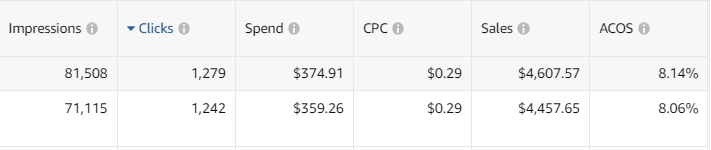
]]>Having spent over $100,000 in Amazon pay-per-click ads in 2019 across of hundreds of campaigns, I’ve learned a lot of lessons that wouldn’t have been obvious at the beginning.
Relatively speaking, Amazon PPC is still a relatively new platform, and it is constantly evolving. New tools and advertising strategies are coming out all the time, and there isn’t as much known about the platform vs something like Adwords or Facebook ads.
Therefore, I wanted to release this post to share all of my key findings over the last year.
Let’s look over some key Amazon pay-per-click strategies that have been helping me to reduce ACoS and make more sales on Amazon!
1. Amazon PPC Converts Very Well
Relatively speaking, Amazon PPC will offer some of the best bang-for-your-buck when it comes to advertising products on Amazon.
While I always recommend focusing the majority of your marketing efforts towards your own website, Amazon PPC is one of the cheapest ways to gain exposure to your Amazon products specifically. And because Amazon shoppers are already much closer to making a purchase, they’re far more likely to convert as well.
Although ACoS (advertising cost of sale) has risen steadily as more advertisers have jumped on the platform, it’s still likely to be one of your more profitable channels, as shoppers are already in the buying state of mind.
This is especially true if you target keywords that are specific and long-tail. A keyword like ‘women’s dress’ is going to lead to shoppers that are simply browsing, whereas a keyword like ‘women’s blue dress with lace’ not only has much less competition, but targets people who have already made up their mind about what they want.
Ideally, you will maximize clicks to customers that are as close to converting as possible. This means that you avoid wasting money on terms people use to ‘browse’ or ‘window shop’, and instead focus on keywords that indicate immediate purchase intent.
2. It’s Sometimes Worth Running Ad Campaigns At A Loss
This doesn’t seem like it would make sense – the entire point of an ad campaign is to make a profit with it, isn’t it?
Unfortunately, it’s not always so simple.
Despite having my ads viewed almost 100 million times in 2019, the overwhelming majority of my sales came from free, organic placements in Amazon’s search engine.
In order for Amazon products to rank, they typically need to have sales in the first place. Amazon uses sales velocity and conversion rate among a number of other factors to determine where to place products for a given keyword.
In order to get your products to rank on page 1, it’s very likely that you will need to run pay-per-click ads – even at a loss, in order for your products to make it.
In an ideal scenario, your product page will convert well enough to maintain its position, even if you turn advertising off. In other cases, continuing (at least some) advertising is required in order to stay on page 1, and continue making those organic sales.
Ultimately, the increase in free, organic sales make up for the fact that the the ads themselves are technically running at a loss.
3. Be Careful With Automatic Campaigns
While the majority of my Amazon advertising campaigns are manual, I have experimented with their automatic campaigns as well.
My results have been very mixed.
In my experience, the higher the search volume for your type of product, the more effective automatic campaigns can be. There are more keywords for Amazon to actually target, and they’re more likely to be relevant.
These can burn through money quickly before they become profitable, but it is much easier to identify profitable keywords and block ads from showing on keywords that lose money.
If you are selling more niche products however, automatic campaigns will likely bid on terms that aren’t relevant enough to convert well.
For example, if I was selling a football themed cotton t-shirt, Amazon’s automatic campaigns were likely to bid on terms such as ‘cotton t-shirt’ – which means our product was showing up for searches that weren’t relevant to 99% of people.
When running an automatic campaign, it’s vital that you’re actively monitoring the keywords you’re being placed for (as well as the ASINs that Amazon places your ad on), and that you actively move irrelevant / non-converting keywords to your negative keywords list.
Otherwise, it’s possible to blow through a large budget without getting much in return for it.
4. Automation Is Key
If you’re running a large number of campaigns, I cannot stress enough how important it is to begin automating some of your routine tasks.
These automations do not have to be particularly complex.
For example, if you can see based on existing organic sales that your product converts at an average of 10%, you can create an automation to automatically move a keyword to negative (or drastically reduce its bid) if it goes 30 clicks without receiving an order.
At the same time, if a keyword is performing particularly well, you may want to automatically increase the bid for it to ensure you appear in the number one spot more frequently.
ACoS can change very quickly. Even something as simple as a new competitor entering or leaving the market can dramatically affect your ACoS for the month, as can Amazon suddenly deciding they’re going to start (or stop) showing your ads for a given keyword.
Automation allows you to stay on top of it all, without room for human error.
Personally, I use Sellics to handle my Amazon PPC automation. It comes with a suite of other tools too, which makes it a pretty good value if you’re spending a good amount of money on Amazon PPC each month.
5. Continuously Optimize Your Listing
Success with Amazon PPC is not only about lowering your cost-per-click, or even finding keywords that convert well.
Remember that Amazon’s goal with pay-per-click is to make the most amount of money possible per placement. This does not only include the cost from the clicks themselves, but also the money they make when the product actually sells.
Amazon wants your product to sell, because they make additional money when it does. Both from the referral fee (on all orders), as well as their fulfillment fee if utilizing FBA.
However, if your product doesn’t convert well, then you’ll be charged higher bids to make up for it.
A few ways to optimize your listing include…
- Writing better bullet points.
- Improving copywriting in the product’s description.
- Adding new / better images showcasing your product.
- Split-testing titles.
- Split-testing prices. Believe it or not, one of my products saw a 11% increase in total profit by lowering price from $19.99 to $19.95! This adds up to thousands of dollars over the course of a year.
Increasing conversions on your listings has a number of key benefits.
- Amazon will place your product in higher ad positions, at a lower cost-per-click. This reduces your advertising cost, and forces competitors to bid even higher to reach the same spot.
- Your listing converts better. More people that click will become buyers, further lowering your advertising cost of sale.
- Because your product converts better, it will move up in Amazon’s search results pages, leading to an increased volume of free, organic sales.
Although I believe it to be overpriced for what it does, Splitly.com is probably the best split-testing tool for Amazon listings at the moment, and it’s what I’m using for my most important tests.
Conclusion
As sellers, it’s important that we embrace the tools that are available to us.
Despite the fact that it cuts even further into our margins, Amazon PPC can be a very effective way to generate the awareness and eyeballs onto your listing, giving it the sales volume it needs to make it to Amazon’s first page.
I hope that this article has been helpful for you. I’d love to hear more about your experiences with Amazon PPC, and the lessons you’ve learned as well. I’m sure we can all benefit from hearing what you have to say.
Finally, for more eCommerce tips, be sure to sign up to my mailing list – I only share information I truly believe to be valuable, and it would be wonderful to have you as one of my subscribers.
To your success,
– James McAllister
The post 5 Lessons I Learned Spending $100,000 On Amazon PPC Ads Last Year appeared first on James McAllister Online.
]]>